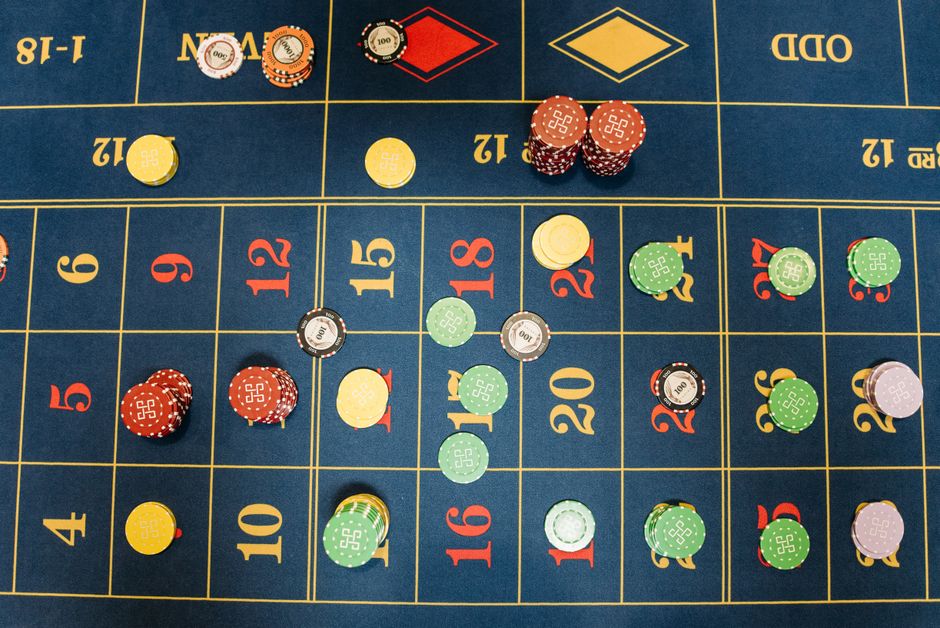


Every poker player has heard the same tired line from a friend who lost fifty bucks on a slot machine: “It’s all luck anyway.” And every slots player has rolled their eyes when a poker pro lectures them about variance and expected value. The truth is messier, more interesting, and actually useful if you want to get better at any iGaming discipline. Luck and skill aren’t opposites. They’re two dials on the same control panel, and knowing which one you’re turning changes everything about how you should play, bet, and think.
Let’s start with the uncomfortable fact that most casino games are pure luck with a house edge bolted on. Roulette? No decision you make changes the expected return. Slots? The reels don’t care how you press the button. Baccarat? Even the “smart” bet on the banker is just a slightly smaller leak. These games are entertainment products, and the operator prices them so that the math grinds you down over time. If your goal is profit, you’re playing the wrong game.
Then there’s poker, blackjack, and sports betting, where decisions genuinely move the needle. In Texas Hold’em, a player who understands pot odds, position, and range construction will beat a casual player over 10,000 hands with near certainty. In blackjack, basic strategy reduces the house edge from around 2% to roughly 0.5% without even counting cards. Add a simple Hi-Lo count and you can flip the edge in your favor, though casinos watch for it. Sports betting is similar: a sharp who line-shops across five books and understands closing line value can grind a small profit, while a recreational bettor chasing parlays donates.
So the first real skill in iGaming isn’t card sense. It’s game selection. Knowing which games reward skill and which ones just extract money is the single highest-leverage decision you’ll make.
Here’s where most people’s intuition breaks. Even in skill-heavy games, short-term results are dominated by luck. A winning poker player might lose for 20,000 hands. A sharp sports bettor can go 2-8 over a weekend. This is variance, and it’s not a bug—it’s the cost of doing business.
Consider a simple example. You’re a 55% favorite in a coin-flip-style bet, which is a huge edge in sports betting terms. Over 100 bets, you’ll still lose money roughly 15% of the time. Over 1,000 bets, that drops to under 1%. The lesson: skill expresses itself over sample sizes most people never reach. If you play 200 hands of blackjack on a Friday night, you’re mostly gambling. If you play 200,000 hands with proper strategy, you’re running a small business.
Ask a losing poker player what went wrong and they’ll blame a bad beat. Ask a winning one and they’ll talk about bankroll management. This is the unglamorous skill that separates survivors from casualties in every iGaming vertical. Anyone weighing up options should see UK88.
The math is simple but brutal. If you play no-limit hold’em, you need at least 20 buy-ins for the stakes you’re playing, ideally 30-50. That means if you want to play $1/$2 with a $200 max buy-in, you should have $4,000 to $10,000 set aside. Anything less and a normal downswing wipes you out. For sports betting, a common rule is 1-2% of your bankroll per bet. If you have $1,000, your standard bet is $10 to $20. That feels boring. It’s also why most bettors go broke.
Slots players need a different frame. Since the edge is fixed against you, bankroll management is really about session limits. Set a loss limit before you sit down, never chase it, and treat the money as spent the moment you deposit it. The players who last are the ones who decide in advance how much entertainment costs them. See UK 88 for a side-by-side comparison.
One of the biggest differences between live and online iGaming is information. In a live poker room, you can watch a player’s hands, breathing, and betting rhythm. Online, you have none of that—but you have something better: hand histories and HUD stats.
A serious online player tracks VPIP (voluntarily put money in pot), PFR (pre-flop raise), and aggression frequency. If a player has a VPIP of 60% and a PFR of 5%, they’re a passive calling station. You value bet them relentlessly. If someone has a 3-bet percentage of 1% over 500 hands, their 3-bet is aces or kings, and you fold everything else. Live players develop the same reads through observation, just slower and less precisely.
The point is that skill in iGaming is often about information asymmetry. The player who tracks more, remembers more, and adjusts faster wins. That applies to poker, sports betting line movement, and even blackjack deck composition.
Let’s put real numbers on it. A slot machine with a 96% RTP returns $96 for every $100 wagered, on average, over millions of spins. A blackjack table with basic strategy returns about $99.50. A poker game with a 5% rake returns maybe $95 to the table as a whole, but a skilled player might take $105 while a bad player takes $85. That difference is the entire game.
This is why “the house always wins” is true for the casino as a whole and false for individual skilled players in the right games. The casino doesn’t care who wins a given hand. It cares about volume and edge. Your job is to find the games where you can be the one with the edge, or to accept that you’re paying for entertainment and budget accordingly.
Stop asking whether a game is luck or skill. Ask a better question: where does my edge come from, and how big is my sample? If you’re playing slots, admit you’re buying entertainment and set a strict loss limit. If you’re playing poker, study ranges, track your hands, and protect your bankroll like it’s a business asset. If you’re betting sports, shop lines, avoid parlays, and bet small. The players who treat iGaming as a skill game where it is one, and as a paid hobby where it isn’t, are the ones still standing a year from now. Everyone else is just funding the rake.

Azurecombe shares practical, down-to-earth guidance on british countryside living, walks and practical outdoor skills for readers across the UK.


Leave A Comment